The short answer... Good practice is:
> Consistent
> Manageable
> Flexible
> Focused (but not intense)
For most beginners and intermediate players, this means:
> A few short sessions each week
> Touching on each area of your playing regularly
> Not trying to cram everything into one day
And importantly... It should fit into your life, not take it over.
Why “more practice” isn’t always better
A lot of people come into lessons thinking they need to practise every day for long periods to make progress. That’s often what puts them off. From what I see (and what students tell me), the real issue isn’t lack of effort. It’s this cycle:
> Start strong
> Do too much
> Feel overwhelmed
> Stop
Sound familiar? This shows up a lot in real student experiences. People say things like:
> “I don’t have time to practise loads every week”
> “I keep starting and stopping”
> “I feel bad when I don’t keep up”
So instead of asking “how much is enough?”, a better question is... What can I realistically keep going?
Consistency beats intensity
There’s a simple idea from The Musician’s Way:
> Regular, thoughtful practice is far more effective than occasional long sessions.
This lines up with what we see in lessons all the time. A student doing:
> 10–15 minutes
> 3–5 times a week
Will usually make more progress than someone doing 2 hours once a week.
Why? Because learning an instrument is about building habits in your brain and body. That happens best with repetition over time, not big bursts.
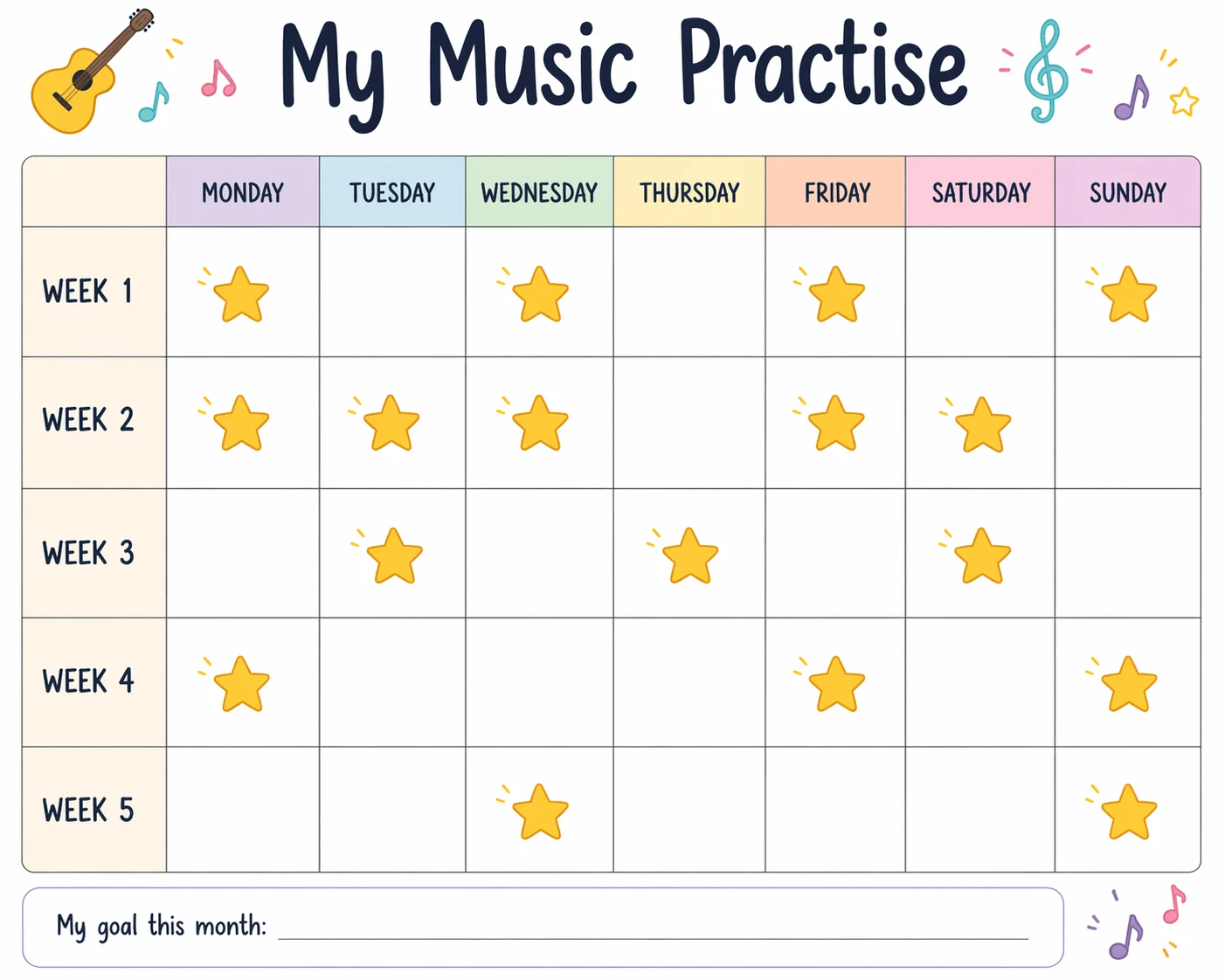
An example of how to set lesson goals for each area of your child's practice
What “enough” practice looks like (for most people)
Here’s a simple, realistic guideline.
Beginners
> 10–20 minutes
> 3–5 times a week
Focus on:
> One or two small things
> Keeping it slow and manageable
Intermediate players
> 20–40 minutes
> 3–5 times a week
Focus on:
> A mix of technique, pieces, and musical skills
> Breaking things into sections
Advanced players
This is where things change. At this level, practice becomes more structured and intentional. You’re working on refining skills, not just building them. If you’re here, it’s worth exploring more detailed practice systems like those in The Musician’s Way, which go deeper into:
> Goal setting
> Deliberate practice
> Performance preparation
But for most students reading this:You don’t need a complicated system yet.
A simple weekly approach that actually works
When I was studying for my Masters in Music Education: Instrumental and Vocal Tuition, my interests and studies centred around positive practice and a growth mindset. This was when I developed the "My Music Practice Journal".
My goal was to help students break practice down into manageable chunks and develop consistency through small goal setting and self reflection. Instead of trying to do everything every day, think in terms of the whole week. This allows for flexibility, which helps those of us who are neurodiverse, whilst still consistently playing and achieving your larger goals.Practice is broken down into 4 main areas:
> Technique (scales, chords etc)
> Pieces or songs
> Sight-reading or improvisation skills
> Musicianship (listening, rhythm, theory)
This is exactly how your practice can be structured in a simple way. In the practice journal, you can see this broken down clearly across the week, rather than crammed into one session . On the practice plan page, each day includes small, focused tasks like:
> A short technique goal
> A small section of a piece
> One musicianship task
Even if one day doesn’t go to plan, you can still catch up later in the week. That flexibility matters.
A Quick Reality Check
You don’t have to be perfect (or even consistent every day)
One of my favourite things from the journal is this note:“On Saturday I had my Aunt’s 50th birthday party… so I didn’t do as much practice as normal.”
That’s real life. And it didn’t stop the student progressing.
There’s also this:“Doing some practice is better than none.”
That mindset is everything. Because the alternative is miss one day
> Feel like you’ve failed
> Stop completely
Instead, we want:
> Miss a day
> Do a little the next day
> Keep going
So what actually makes practice "good"?
1. Be clear on what you're doing
Instead of:
“I’ll just play for a bit”
Try:
> “I’m working on bars 1–4”
> “I’m slowing this down”
> “I’m fixing that one chord change”
Small goals = better progress
2. Slowing things down
Most mistakes come from going too fast too soon. Good practice often looks like:
> Slower than you think
> Repeating small sections
> Taking your time
This is exactly what one student noticed:“Practising slowly… helped me concentrate on getting the right notes first.”
3. Paying attention
You don’t need loads of time. You need:
> A bit of focus
> A clear intention
Even 10 minutes of focused practice is valuable.
4. Reflecting (just a little)
At the end of a session, ask:
> What went well?
> What felt hard?
> What will I do next time?
This will help you structure your practice better next time, as well as giving your teacher some valuable insight for how things are going at home, making your lesson time more efficient.
5. Flexibility is part of good practice
Life isn’t consistent. Energy isn’t consistent. Your practice doesn’t need to be either. Some days you might:
> Focus deeply
> Make lots of progress
Other days:
> You’re tired
> You just do something small
> Both count.
In fact, one student wrote:They had a hard day and didn’t feel up to practising fully. So they did a smaller, more enjoyable task instead That’s good practice because they kept going.
Want something to guide you?
If you like having a bit of structure (without it feeling rigid), my practice journal is designed exactly for this. It helps you:
> Plan your week simply
> Break practice into small steps
> Reflect without overthinking
> Stay consistent without pressure
Check out 'My Music Practice Journal" Final Thoughts
You don’t need perfect practice.
You don’t need loads of time.
You don’t need to get it right every day.
You just need:
> A small plan
> A bit of consistency
> A way to keep going
Because in the end, good practice isn’t about doing the most. It’s about doing enough, often enough, so you don't burn out and stop. And that’s where real progress happens.
If you like having a bit of structure (without it feeling rigid), my practice journal is designed exactly for this.