


Most traditional practice advice is not designed for ADHD brains. And when something does not fit how you think and learn, it is going to feel difficult. The good news is that guitar practice can work in a very different way.It can feel engaging, flexible, and even enjoyable.
Here are some simple ways to make practice work with ADHD, rather than against it.
Why Traditional Practice Advice Often Doesn’t Work
A lot of practice advice is built around ideas like:
> Practise for long periods of time
> Repeat the same thing over and over
> Stick to a strict routine
> Push through when it feels difficult
For someone with ADHD, this can quickly lead to:
> Boredom
> Frustration
> Avoidance
> Feeling like you are “failing”
The problem is not a lack of ability.It is a mismatch between the method and the person. ADHD brains tend to respond better to:
> Variety
> Short bursts of focus
> Clear, immediate goals
> Interest and engagement
When practice includes these things, it becomes much easier to stay with it.
> Practise for long periods of time
> Repeat the same thing over and over
> Stick to a strict routine
> Push through when it feels difficult
For someone with ADHD, this can quickly lead to:
> Boredom
> Frustration
> Avoidance
> Feeling like you are “failing”
The problem is not a lack of ability.It is a mismatch between the method and the person. ADHD brains tend to respond better to:
> Variety
> Short bursts of focus
> Clear, immediate goals
> Interest and engagement
When practice includes these things, it becomes much easier to stay with it.
1. Keep Practice Short and Flexible
Long practice sessions are rarely helpful here. Short sessions work much better. This might look like:
> 5 to 15 minutes at a time
> One or two small goals
> Stopping before it starts to feel draining
Some days you might practise more. Some days less.
That is okay.
What matters is that practice feels possible to start. If it feels too long or too demanding, your brain is more likely to avoid it altogether. Short sessions remove that barrier.
> 5 to 15 minutes at a time
> One or two small goals
> Stopping before it starts to feel draining
Some days you might practise more. Some days less.
That is okay.
What matters is that practice feels possible to start. If it feels too long or too demanding, your brain is more likely to avoid it altogether. Short sessions remove that barrier.
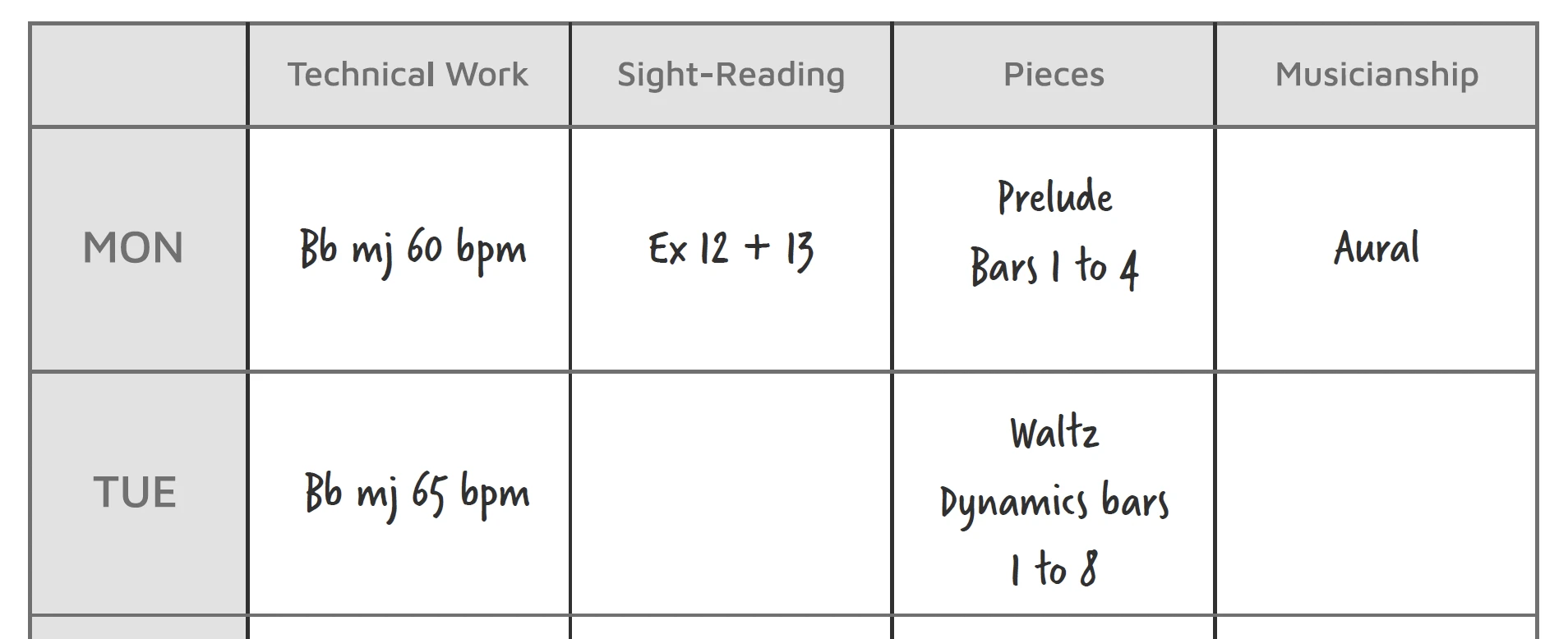
An example of how to set lesson goals for each area of your child's practice
2. Follow Interest, Not Just Structure
Interest plays a big role in focus. If something feels interesting, it is much easier to stay engaged. This means it is okay to:> Spend time on songs you actually like
> Repeat something because you enjoy it
> Change focus if something feels stale
> Practice does not always have to follow a strict plan
There can still be structure, but it should leave room for interest. For example, a session might include:> A few minutes on something new
>A few minutes on something familiar
> Time to play something you enjoy
This balance helps keep attention without feeling restrictive.
> Repeat something because you enjoy it
> Change focus if something feels stale
> Practice does not always have to follow a strict plan
There can still be structure, but it should leave room for interest. For example, a session might include:> A few minutes on something new
>A few minutes on something familiar
> Time to play something you enjoy
This balance helps keep attention without feeling restrictive.
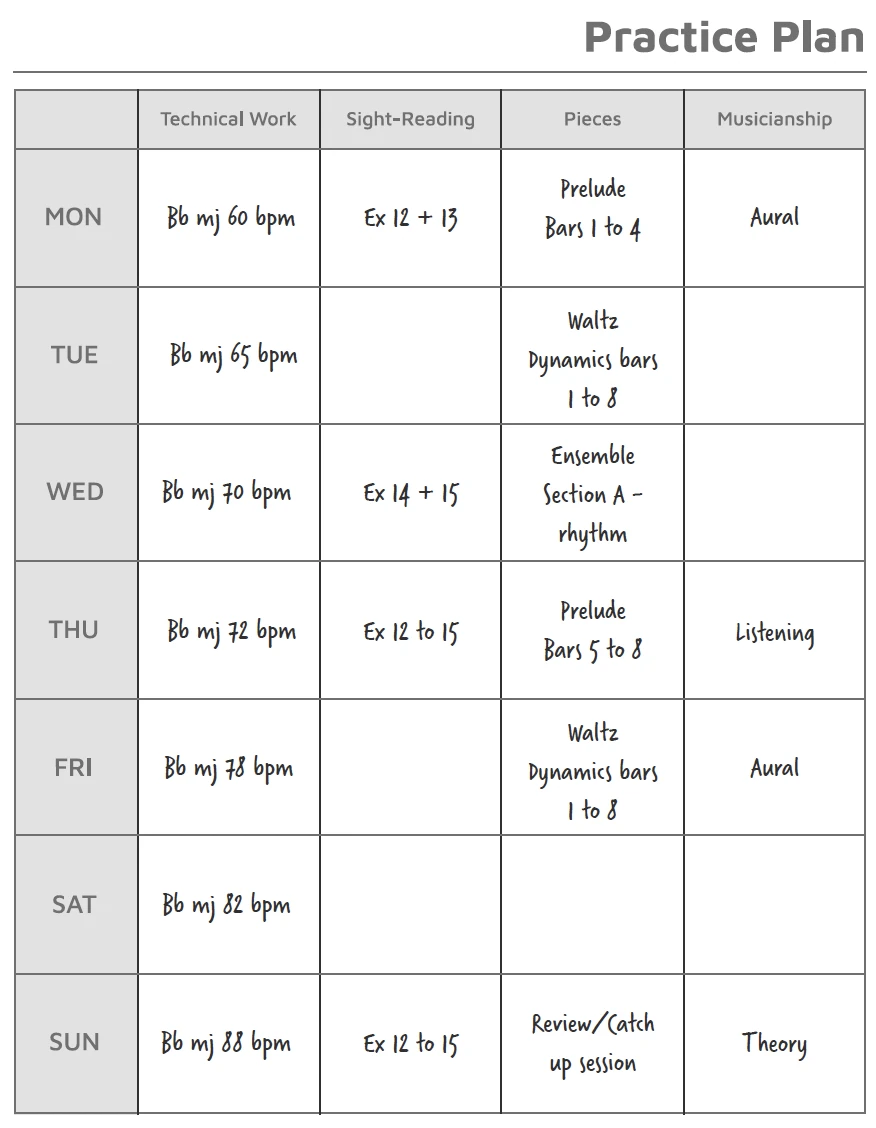
An example of a practice timetable.
3. Use Very Small, Clear Goals
Big tasks can feel overwhelming. Smaller goals make it easier to get started and stay focused.
Instead of:“Practise your song”
Try:> “Switch between these two chords five times”
> “Play the first line slowly”
> “Focus on this one part for a few minutes”
Clear goals give your brain something specific to hold onto. They also make it easier to notice progress, which helps with motivation.
Instead of:“Practise your song”
Try:> “Switch between these two chords five times”
> “Play the first line slowly”
> “Focus on this one part for a few minutes”
Clear goals give your brain something specific to hold onto. They also make it easier to notice progress, which helps with motivation.
4. Change Things Before You Get Bored
One of the most helpful things you can do is notice when attention starts to drop. Instead of pushing through, it is often better to change activity.
You might:> Switch to a different part of the song
> Try something slightly easier
> Play something you already know
> Take a short break
This is not “giving up”. It is working with your attention rather than against it. Moving on at the right time helps keep the overall experience positive.
You might:> Switch to a different part of the song
> Try something slightly easier
> Play something you already know
> Take a short break
This is not “giving up”. It is working with your attention rather than against it. Moving on at the right time helps keep the overall experience positive.
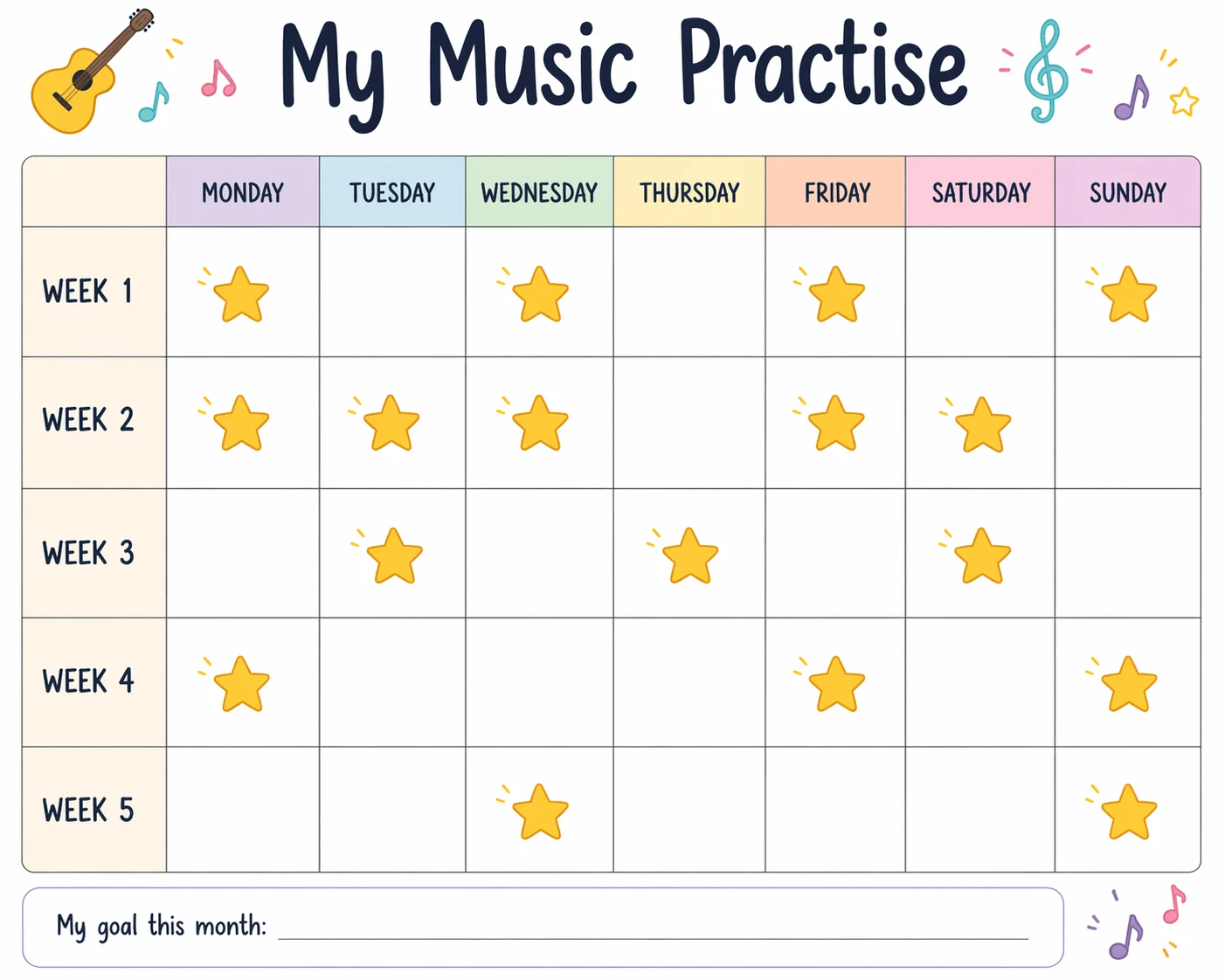
An example of a music reward chart. Never underestimate the power of a sticker!
5. Make It Feel Low Pressure
Pressure and ADHD do not mix well. If practice feels like something you “have to do”, it is much harder to engage with it.
It helps to:
> Remove the idea of perfect practice
> Accept that some sessions will be messy
> Focus on showing up, not getting everything right
You do not need every practice session to be productive in a perfect way. Even a few minutes of focused effort is valuable. When practice feels low pressure, it becomes much easier to return to it again.
It helps to:
> Remove the idea of perfect practice
> Accept that some sessions will be messy
> Focus on showing up, not getting everything right
You do not need every practice session to be productive in a perfect way. Even a few minutes of focused effort is valuable. When practice feels low pressure, it becomes much easier to return to it again.
An example of a practice timetable.
6. Use Repetition, But Keep It Active
Good practice is often much simpler than people expect. It might look like:
> 10 to 15 minutes
> One small area of focus
> A few careful repetitions
> Ending with something they enjoy
That is enough. Over time, these small sessions build confidence, skill, and a sense of progress.
> 10 to 15 minutes
> One small area of focus
> A few careful repetitions
> Ending with something they enjoy
That is enough. Over time, these small sessions build confidence, skill, and a sense of progress.
7. Let Practice Look Different Each Time
Not every session needs to follow the same format. Some days might be more focused. Some might be more relaxed.
Some might just be:> Picking up the guitar for a few minutes
> Playing something familiar
> Exploring sounds without a clear goalThis still counts.
Consistency does not mean doing the same thing every time.It means coming back to the instrument regularly in a way that feels manageable.
Some might just be:> Picking up the guitar for a few minutes
> Playing something familiar
> Exploring sounds without a clear goalThis still counts.
Consistency does not mean doing the same thing every time.It means coming back to the instrument regularly in a way that feels manageable.
What ADHD-Friendly Practice Actually Looks Like
In real terms, practice might look like:
> 10 minutes total
> 2 or 3 short sections
> One small focus at a time
> Switching tasks when needed
> Ending with something enjoyable
That is enough.Those small sessions still build:Skillconfidencefamiliarity with the instrument. Over time, it adds up.
> 10 minutes total
> 2 or 3 short sections
> One small focus at a time
> Switching tasks when needed
> Ending with something enjoyable
That is enough.Those small sessions still build:Skillconfidencefamiliarity with the instrument. Over time, it adds up.
A Quick Reality Check
There will be days where practice does not happen.
There will be times where focus is harder than usual.
There might be periods of starting and stopping.
This is all normal.ADHD often comes with fluctuating energy and attention.
Progress is not about being perfectly consistent.
It is about returning to it, again and again, in a way that works for you.
There will be times where focus is harder than usual.
There might be periods of starting and stopping.
This is all normal.ADHD often comes with fluctuating energy and attention.
Progress is not about being perfectly consistent.
It is about returning to it, again and again, in a way that works for you.
Final Thoughts
You are not bad at practising.
You just need an approach that works with how your brain functions.
When practice feels flexible, engaging, and low pressure, it becomes much easier to stick with. And when you can stick with it, progress follows naturally.
You just need an approach that works with how your brain functions.
When practice feels flexible, engaging, and low pressure, it becomes much easier to stick with. And when you can stick with it, progress follows naturally.
