
Top 5 Instrumental Practice Tips for Parents

If your child is learning guitar, you’ve probably found yourself wondering a few things.

> How do I help them practise without it turning into nagging?

> Why do they seem interested one minute and then lose it the next?

> Are they actually practising enough to make progress?

These are very common worries.

Most parents want to support their child, but also want to avoid creating pressure or tension around practice. It can be a difficult balance to get right. The good news is that practice does not need to be strict or intense to be effective. In fact, the most consistent progress usually comes from practice that feels simple, manageable, and encouraging.

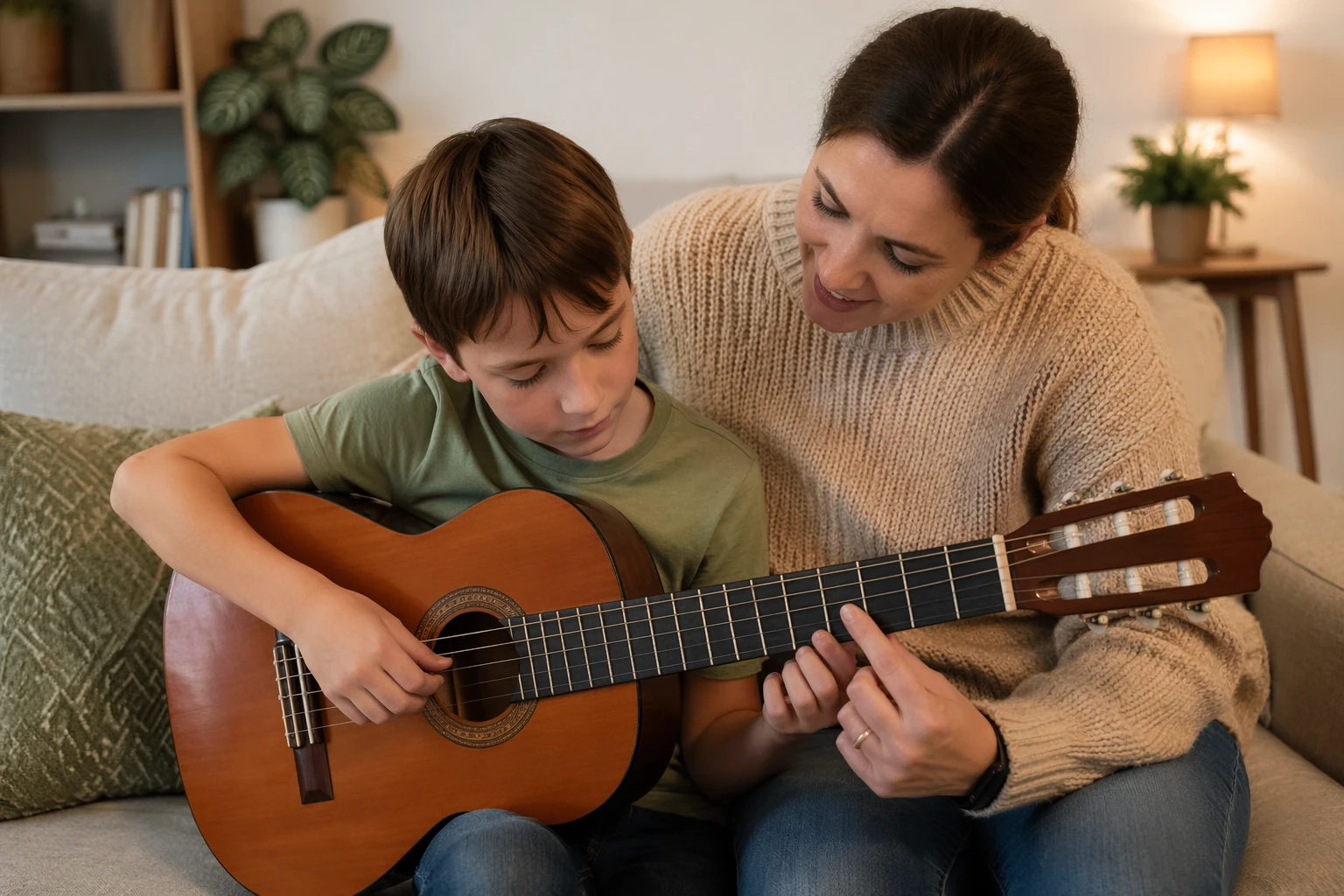
This is something any good instrumental teacher will discuss with your child, but sometimes having a chat at the end of a lesson with the teacher is not always possible, especially not if the student has their lessons in a school setting. So here are five practical ways you can support your child’s guitar practice at home in a way that actually works.
1. Keep Practice Short and Manageable

A lot of people assume that practice needs to be long to be useful. This is not the case, especially for children.

Short, focused sessions are usually far more effective than longer ones.

A good starting point is around 10 to 20 minutes, three times a week. That is enough to build progress without it feeling like too much. Short sessions work well because they feel achievable. Your child is more likely to get started if the task feels manageable. It also helps them stay focused and avoids the frustration that often comes with trying to do too much at once.

When children avoid practising, it is often not because they are being lazy. It is usually because the task feels too big or too difficult to start.Keeping practice short helps it feel like something they can handle, rather than something they want to put off.

2. Focus on One Small Thing at a Time

It is very natural to ask a child to play a full song. However, for beginners, this can feel overwhelming and discouraging. It is much more helpful to focus on one small part at a time. This could be a single chord change, a short section of a song, or a specific technique.

Breaking things down like this makes progress easier to see. It also reduces frustration and helps build confidence more quickly.For example, instead of working through a whole song, your child might spend a few minutes switching between two chords. Once that feels comfortable, they can move on to the next step.These small, focused moments of success are what build real progress over time.

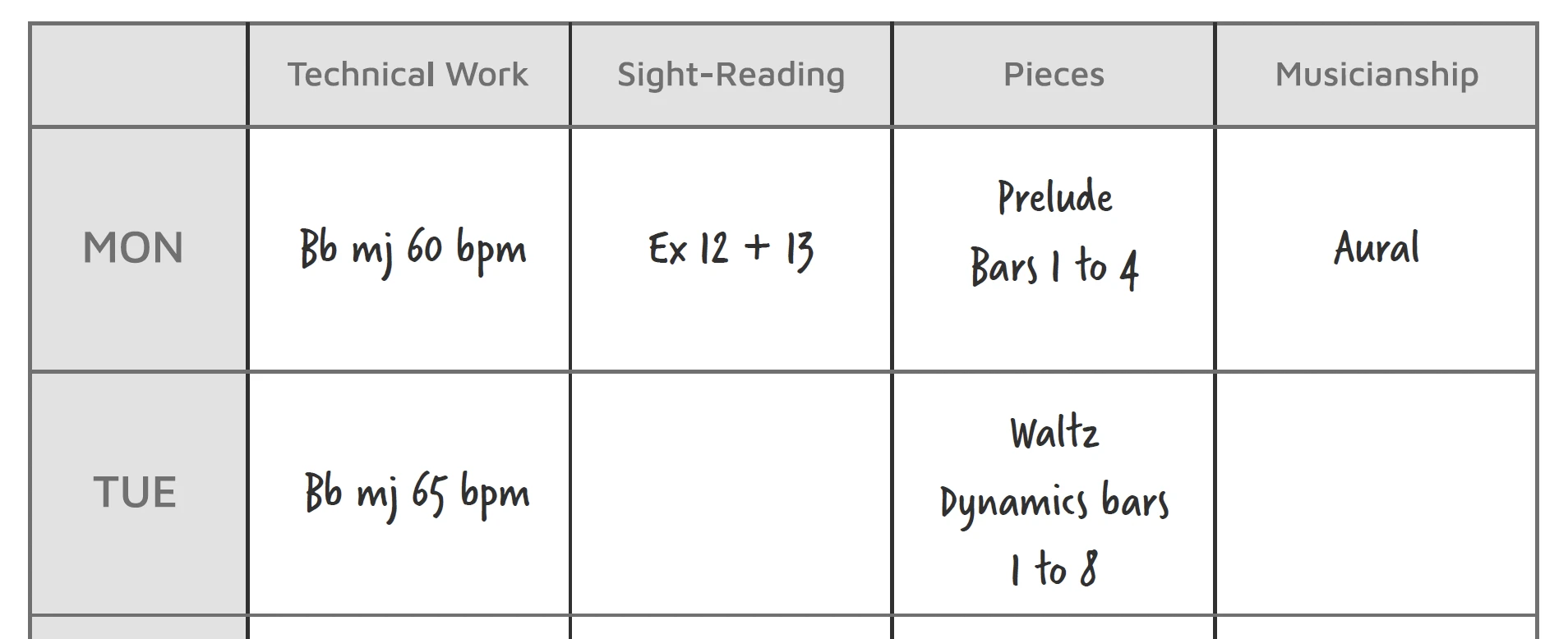
This is where setting manageable, small goals for each practice session can work really well.
A table showing small goals for each section of the practice
An example of how to set lesson goals for each area of your child's practice

3. Encourage Effort Rather Than Perfection

Many children stop practising because they feel like they are getting things wrong. You might hear comments like:

> “I can’t do this”
> “I’m not very good at this”


These moments are important!

Rather than focusing on whether it sounds right, it helps to respond to the effort they are making. You could say things like:

> "That sounded better than last time"
> "I can see you are really trying"
> "It is okay to get things wrong while you are learning"


When children feel judged, even in a small way, they are more likely to avoid practising. They can lose confidence quite quickly.When they feel supported and encouraged, they are more likely to keep going, even when something feels difficult.Learning an instrument is a process of trying things repeatedly. It is not about getting everything right straight away.

4. Build a Simple Routine Without Being Too Strict

Consistency plays a big role in progress, but it does not need to be rigid.

It is usually more helpful to have a loose routine rather than a strict schedule.

For example, practice might happen after school on certain days, before dinner, or at a similar time each week. What my sisters and I did as children, was any technical work before school aka "the boring stuff", although I actually love scales as an adult, and then your pieces aka "the fun stuff" after school when your child is more tired.

Having a general pattern makes it easier for practice to become part of everyday life.

At the same time, it is important to stay flexible. Some days will be busier than others. Energy levels change, especially for children.If practice becomes too fixed or pressured, it can start to feel like a chore.

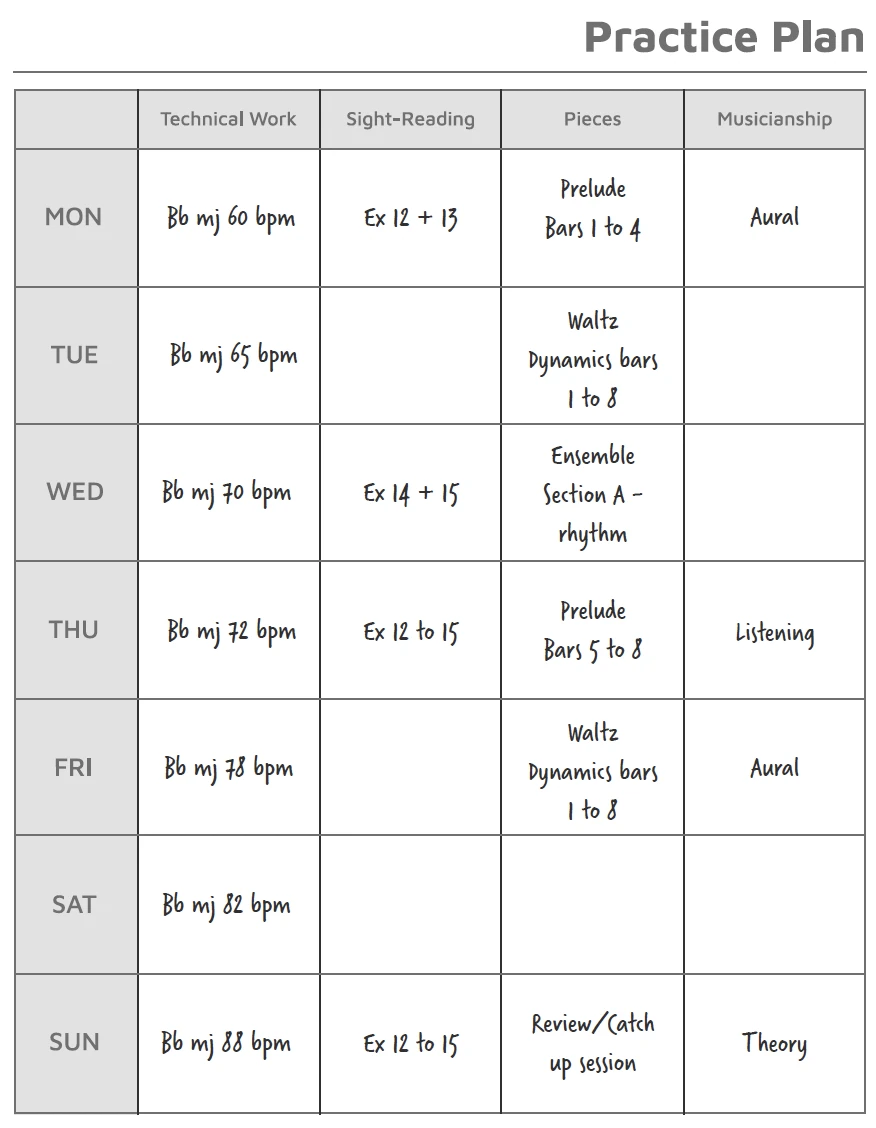
A simple, predictable rhythm works well, as long as there is room for flexibility when needed.
A table showing small goals for each section of the practice
An example of a practice timetable.

5. Keep the Experience Positive

The way your child feels during practice has a big impact on whether they continue learning.

If practice feels stressful or forced, they are much more likely to lose interest over time.If it feels calm, supportive, and safe, they are far more likely to keep going.

There are a few simple ways to support this:Let them show you what they have been working on, even if it is something small.

> Notice their effort, not just the end result
> Try to avoid turning practice into a source of conflict
> Accept that some sessions will not go perfectly


It is also completely fine to miss a day now and then. Long-term consistency comes from a positive experience, not from pressure.

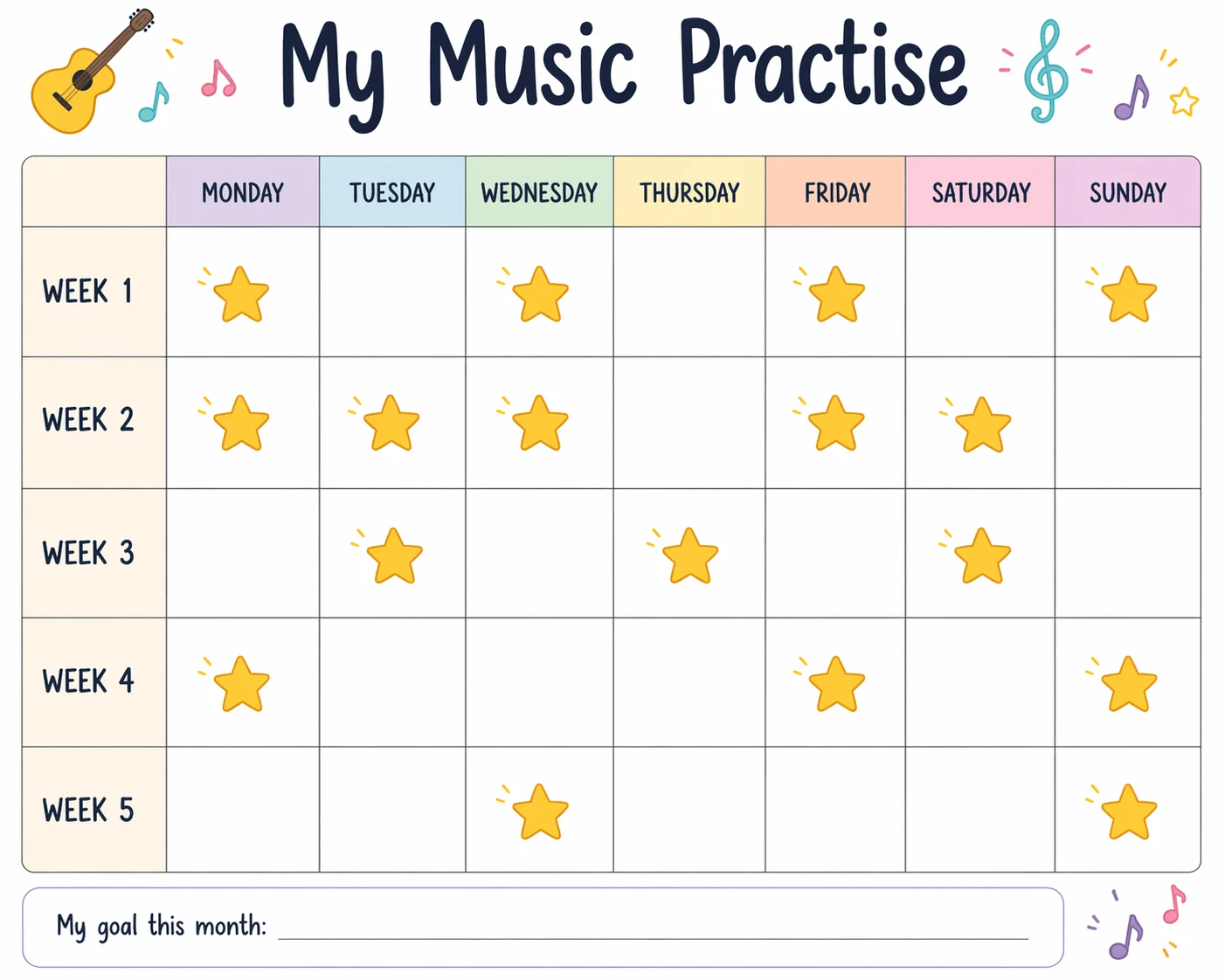
And of course... never underestimate the power of a sticker chart!
A table showing small goals for each section of the practice
An example of a music reward chart. Never underestimate the power of a sticker!

A Quick Reality Check

It is very normal for children to have inconsistent weeks. They might forget to practise, get distracted, feel frustrated, or lose motivation for a while. This is all part of the learning process.

Learning an instrument does not follow a straight path and is often incredibly frustrating.

What matters most is that your child feels supported, not judged, and knows that it is okay to learn at their own pace.

What Good Practice Actually Looks Like

Good practice is often much simpler than people expect. It might look like:

> 10 to 15 minutes
> One small area of focus
> A few careful repetitions
> Ending with something they enjoy

That is enough. Over time, these small sessions build confidence, skill, and a sense of progress.

Final Thought

You do not need to be a musician to support your child’s learning. You do not need to correct them or teach them yourself. The most helpful thing you can do is create an environment where practice feels safe, manageable, and positive.

When a child feels comfortable, they are much more likely to keep going. And that is what leads to real, lasting progress.
Image of a classical guitar hanging on a wall

Book your guitar lesson

Ready to get started? Book your lesson using the form on the contact page or get in touch to find out more